The Ultimate Guide to Backpacking With a Baby
by Jared Anderson & Taffin Evans
Peter Lougheed Provincial Park, Alberta
Taking Scout Into the Backcountry
Backpacking has always been one of our favourite ways to get outside, and we weren’t about to give it up once Scout came along! This summer we took him on his first two backpacking trips, both in Peter Lougheed Provincial Park: Point Campground when he was 9 months old, and Elbow Lake when he was 11 months old. We did one night each time, and he did so well in the tent.
In this guide, we’re sharing everything we learned: how we picked our first trip, how Scout slept in the tent, how we carried him and all our gear, feeding, diapers, life at camp, what we pack, and our top tips for your first backpacking trip with a baby. Save this one for next summer!
How We Picked Our First Trip
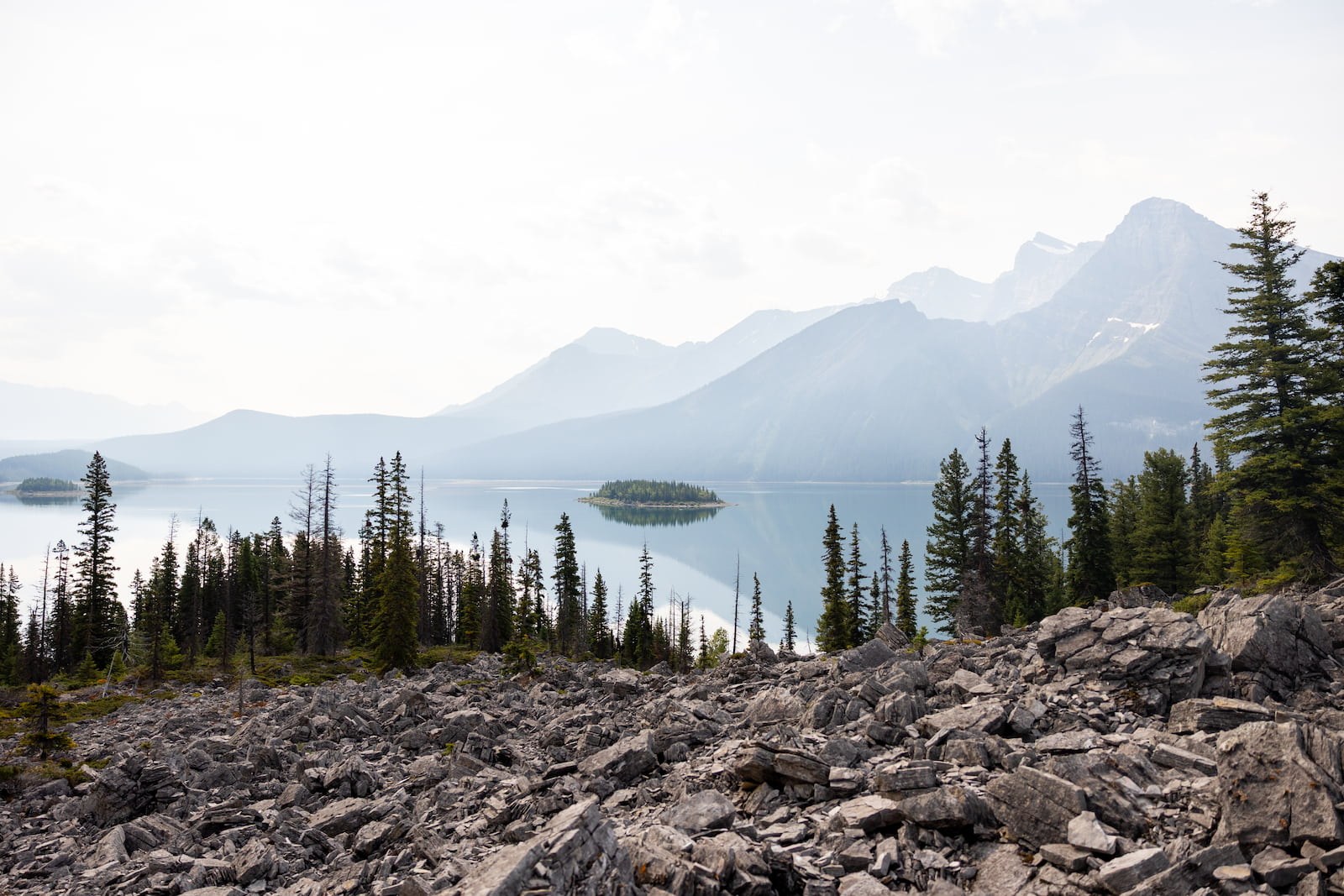
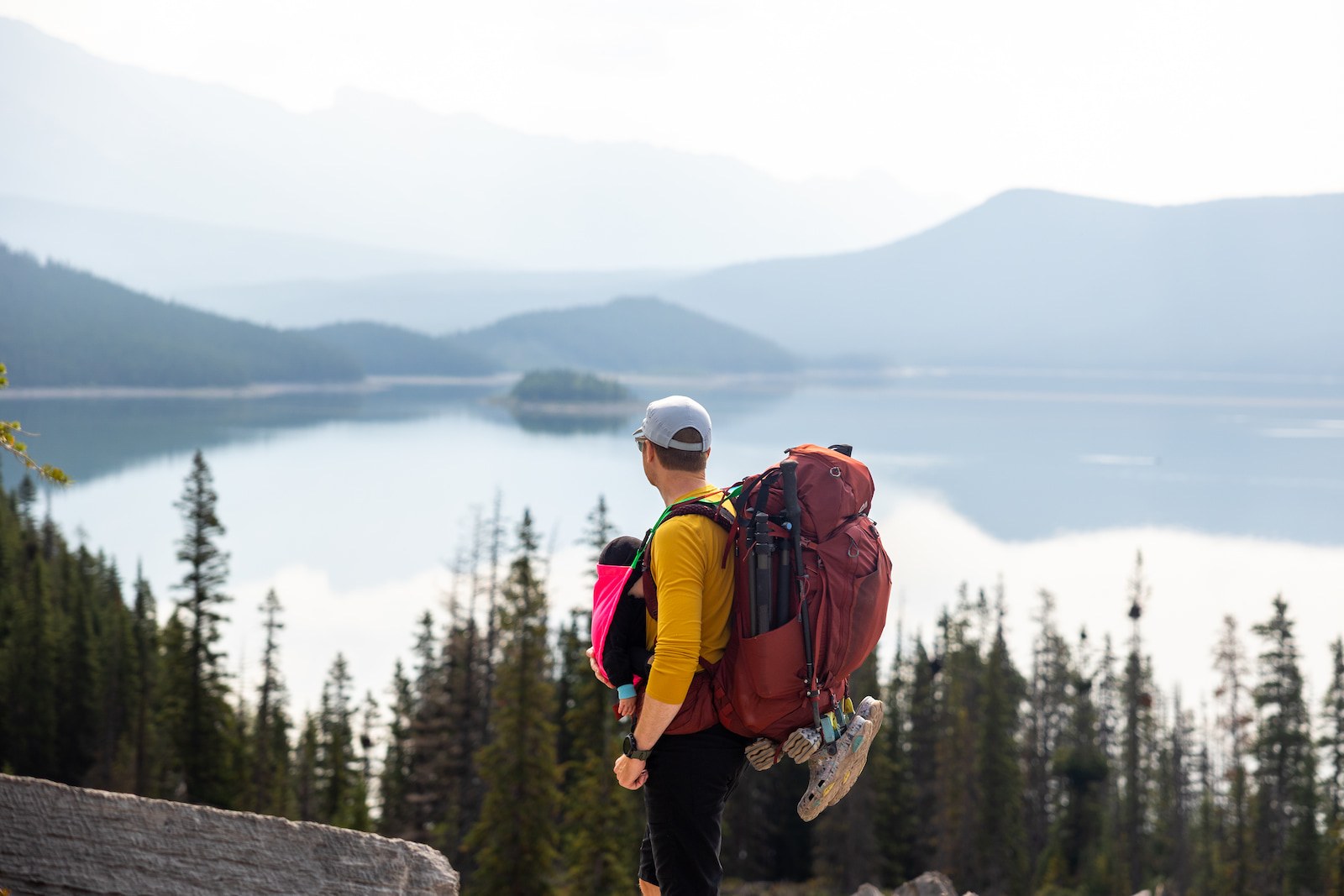
Point Campground was Scout’s first backpacking trip. It’s about 4 km one way with very little elevation gain, which made it a great place to start. For our second trip we went to Elbow Lake, which is only about 1 km one way.
We chose designated provincial park campgrounds over random camping on purpose. Both have tent pads, bear-proof lockers for food and scented items, and picnic tables for eating. Those little conveniences make a big difference with a baby! Just remember to book your backcountry site ahead of time.
If you can, pick a trail you’ve already done. Knowing exactly what to expect makes you feel a lot more comfortable heading out with a little one.
Sleeping in the Tent With a Baby
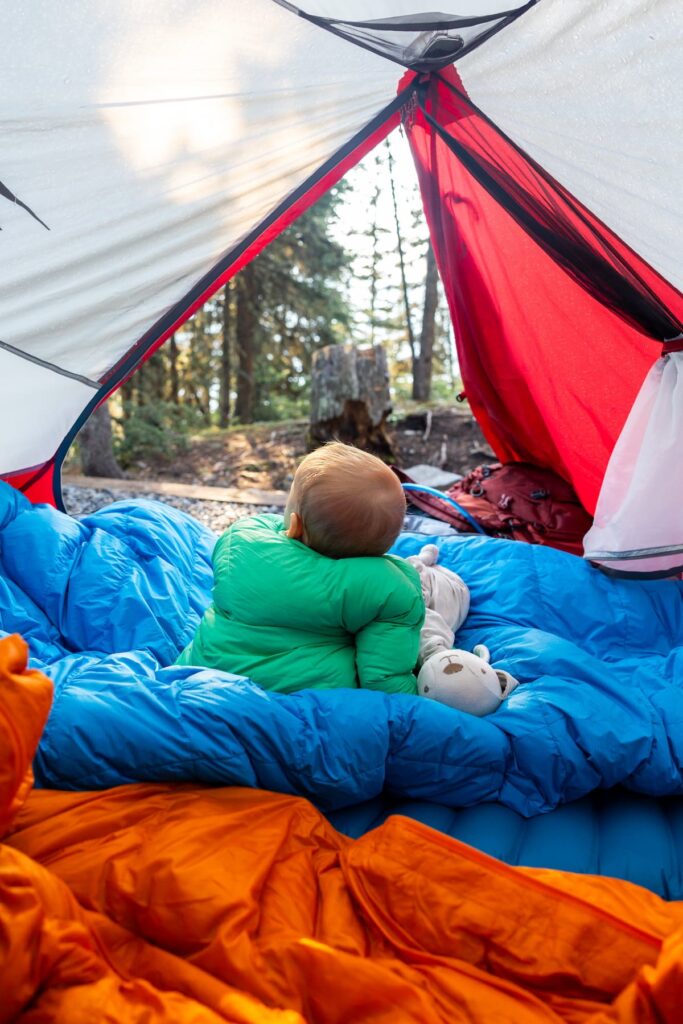
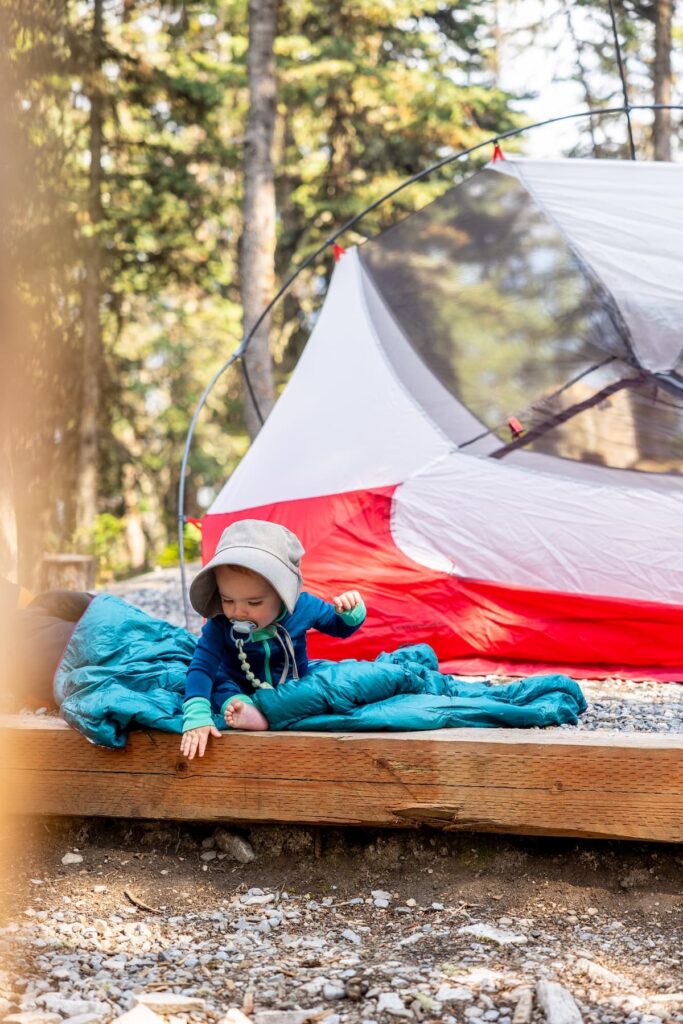
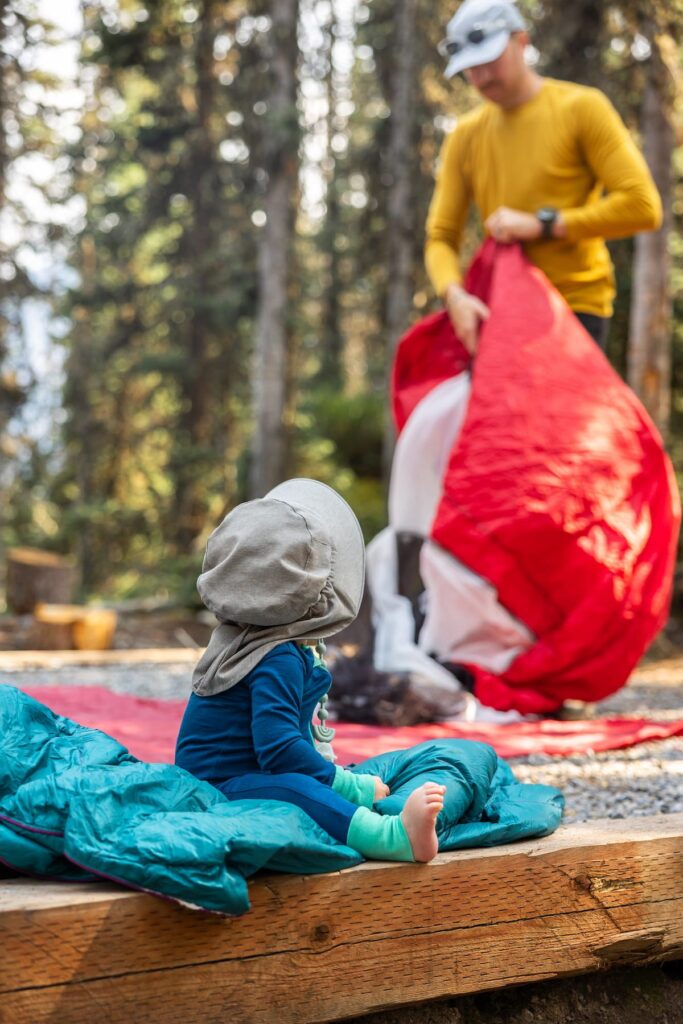
We use our MSR Hubba Hubba 2-person tent (affiliate link to the newer LT version) and our Nemo Quasar 3D Insulated sleeping pads. For Scout, we got the Morrison Outdoors Little Mo -6°C down sleeping bag (affiliate link).
Scout slept in his sleeping bag between us, kind of like a sleep sack, without his own pad. He wore just his Wee Woollies merino base layer underneath, and he was so toasty warm that at one point in the night I had to unzip his bag a bit to cool him down!
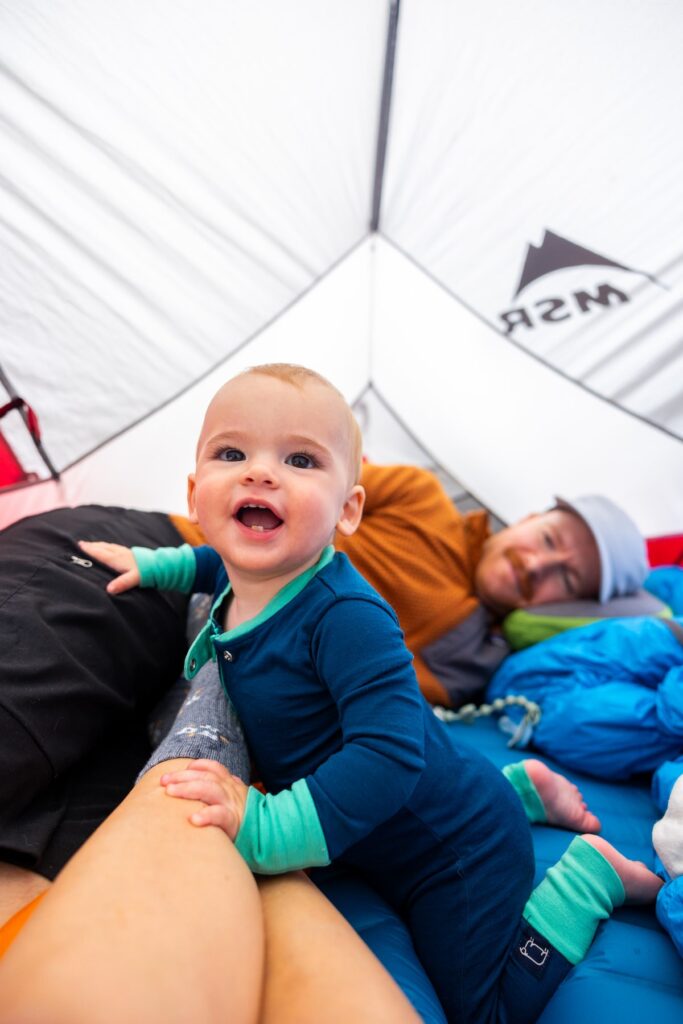
He normally sleeps through the night at home, but he woke up a couple of times in the tent. We weren’t too fussed. It was his first time sleeping in a tent, and it was summer, so it was super light out when he’s used to a blackout room. Lots of cuddles and rocking got him back to sleep each time.
To make the tent feel a little more like home, we brought his lovey bunny and a few pacifiers, the same things he has in his crib.
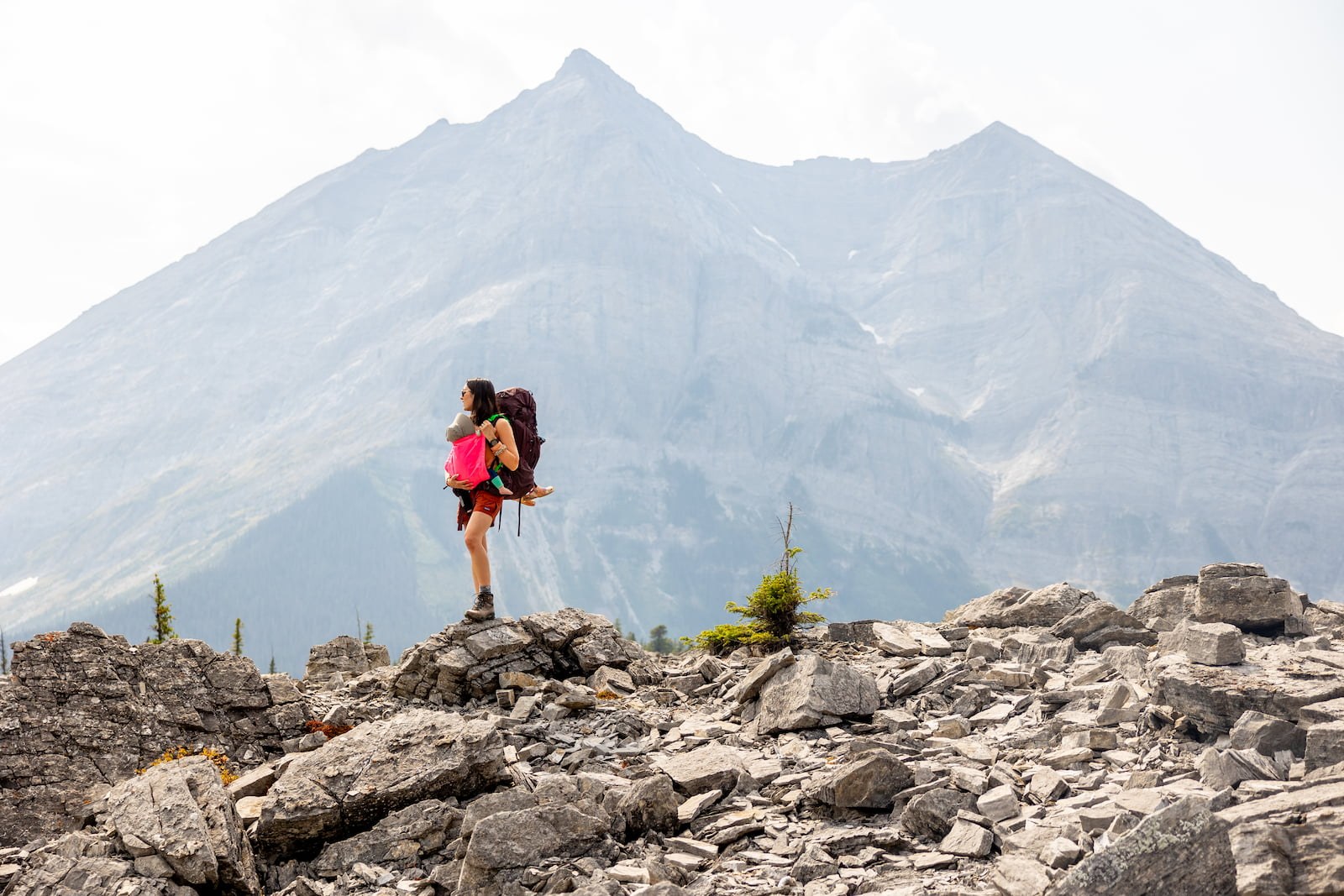
How We Carry Baby (and All the Gear)
Feeding Baby in the Backcountry
I was still breastfeeding Scout, so he fed the same way he does at home. We also packed lots of food and snacks we knew he already likes, like banana pancakes, puff crackers, kiwi and oatmeal.
Diapers in the Backcountry
We use disposable diapers, and we probably WAY overpacked them. But in the backcountry there was no way we were running out, so more was most definitely more! Bring plenty of wipes and a spare Ziploc bag to pack out the dirty ones.
Life at Camp With a Crawling Baby
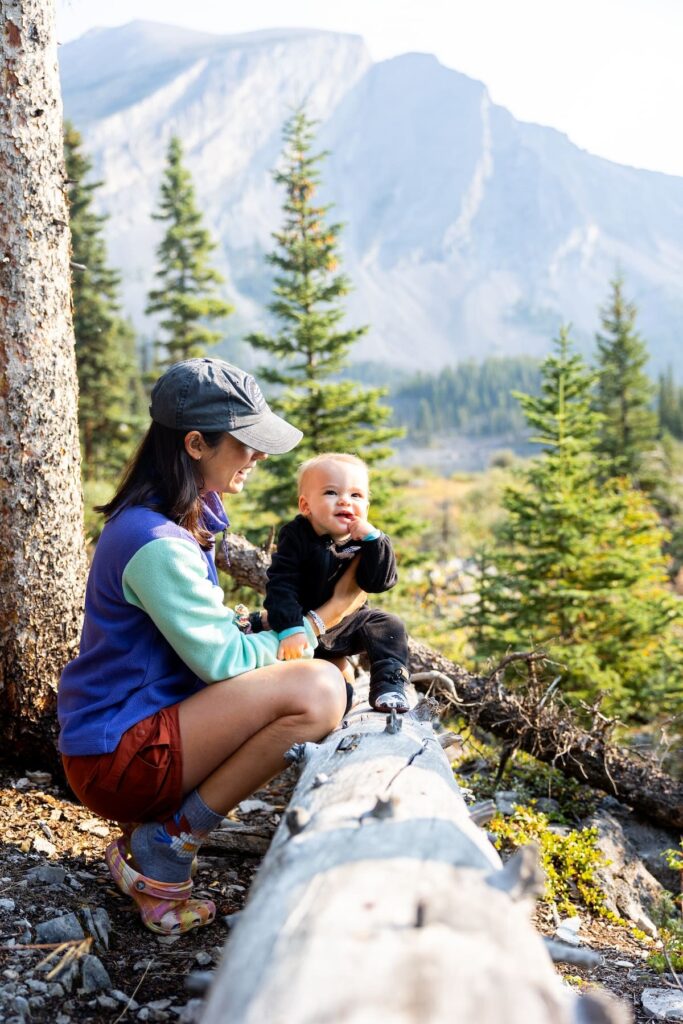
At camp, we just let Scout do what he normally does at home. He was learning to crawl and pull himself up, so he practiced that around the campsite instead!
We’re not too fussed when he puts a bit of nature in his mouth (dirt, sand, leaves…). What we watch closely is rocks, especially small ones he could swallow. Be prepared for a mess. There were dirt and rocks everywhere, but that’s half the fun!
We always watch him closely around the fire, and someone holds him whenever we’re boiling water or cooking.
Bear safety didn’t change with a baby. We always have bear spray on us, and our food and scented items went straight into the bear lockers.
Why We Left the Dogs at Home (This Time)
Whisky and Echo usually come backpacking with us. They each carry their own Kurgo backpack with saddlebags (affiliate link), packed with their jackets, base layers, food, snacks, collapsible bowls and poop bags (more on that in our Ultimate Guide to Camping With Dogs).
This summer, though, we decided to leave them at home for a few reasons:
- Grizzlies. At our first site there was a lot of grizzly activity, and the bears were being very aggressive, especially towards people with dogs (leashed or not).
- Space. Two adults, a baby and two medium-sized dogs in a 2-person tent would have been very squishy.
- Safety. Scout is still learning his boundaries with the dogs, especially Echo. Being together in a small, closed-in space at his age felt like a lot, and we wanted to get used to backpacking with a baby first.
The dogs and Scout generally do really well together, but there’s still a learning curve, and we want to make sure everyone stays safe. This is what worked for our family this year, and if you’re in the same spot, no dog-parent guilt needed! Whisky and Echo still get tons of love, treats and time with us. We’re planning to get a 4-person tent for next year so they can come along again.
What We Pack (On Top of Our Day Hike List)
Our backpacking list builds on what we bring for a day hike with Scout (see The Ultimate Guide to Hiking With a Baby) and our Top Ten Backpacking Must-Haves. Here’s what we add for a night in the backcountry:
- Warm layers: toque, extra Wee Woollies base layer, fleece, booties and extra socks
- Diaper stuff: extra diapers, wipes and a spare Ziploc bag
- Sleep: his sleeping bag, pacifiers and his lovey bunny
- Food: lots of snacks and food he already likes
Our Top Tips for Your First Trip
1. Choose a shorter, easier trail. One you’ve done before is even better, so you know what to expect.
2. Check the weather before you go. Pack the right layers, or a rain jacket and rain suit, like we needed!
3. Pack extra baby items. Diapers, wipes, pacifiers, snacks, food and clothing.
4. Be prepared for a mess. Dirt and rocks everywhere is all part of the fun.
5. Go with the flow. Scout woke up more than usual, and that’s okay. It’s all new for them too.
Beginner-Friendly Backpacking Campgrounds in Alberta
Both of Scout’s first trips were great for beginners: easy trails to follow, minimal distance and elevation gain, plus tent pads, bear lockers and picnic tables.
- Point Campground, Peter Lougheed Provincial Park (about 4 km one way)
- Elbow Lake Campground, Peter Lougheed Provincial Park (about 1 km one way)
Have a question about backpacking with a baby, or about the gear we use? Send us a message on Instagram at @andrsn.pck. We’d love to hear where you’re headed!
The Anderson Pack, in your inbox
New trip reports and guides, about once a month
Family-friendly trails, gear we actually use and free one-page guides from the Alberta Rockies.
No spam, ever. Unsubscribe anytime.