Why Getting Outside Is So Good for Your Family, According to Science
by Jared Anderson & Taffin Evans
Alberta, Canada
Why We Make Time to Get Outside
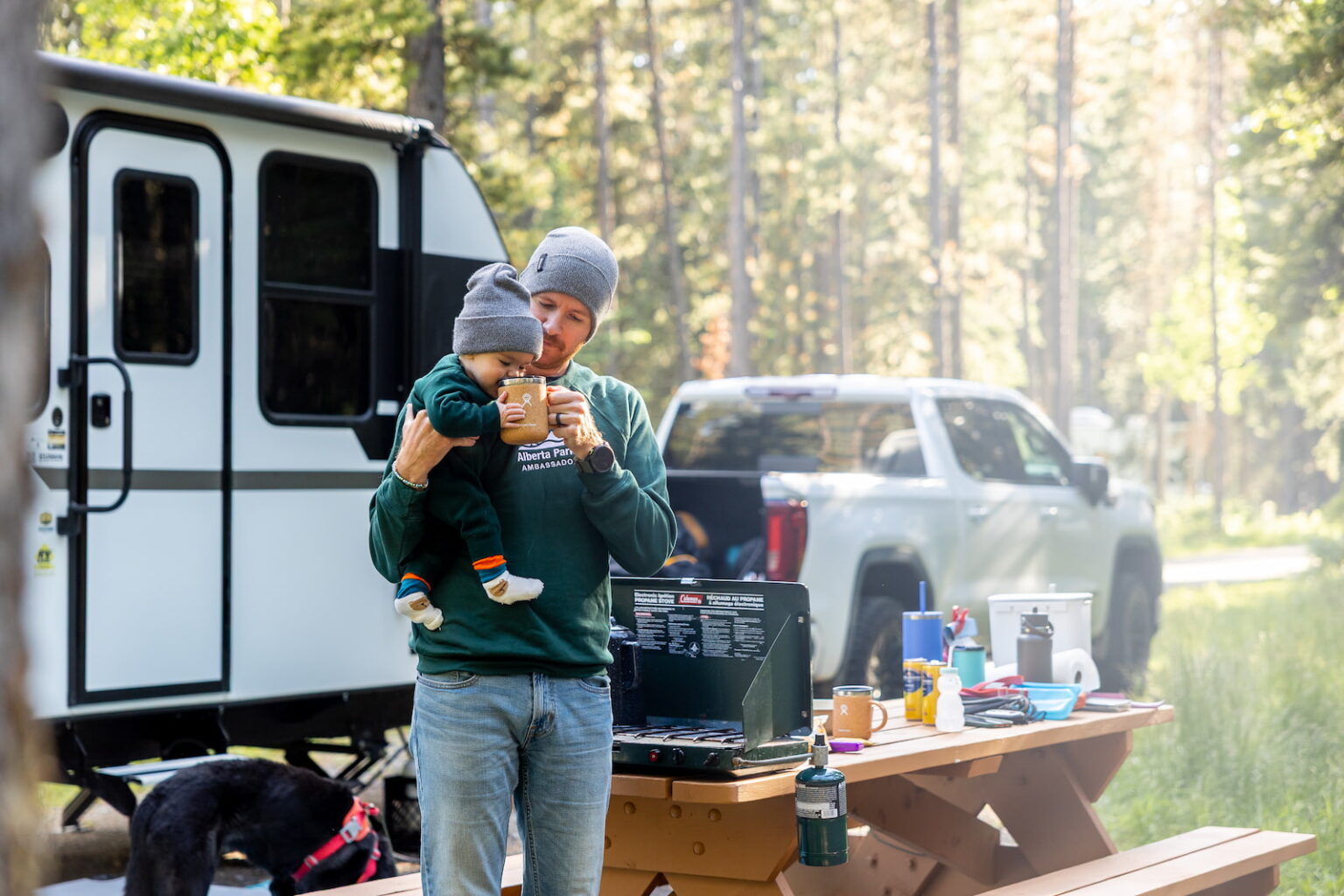
For us, getting outside has always been the reset button. A hike, a walk around the block with the dogs, or coffee on the tailgate before a trail. Since Scout arrived, it’s become even more important. Some days, getting out the door takes the longest, but we’ve never once regretted it.
It turns out there’s a lot of science behind that feeling. In this post, we’re sharing what the 1000 Hours Outside movement is all about, what the research actually says about time outdoors for kids and adults, and how we fit it into real life with a baby and two rescue dogs.
What Is 1000 Hours Outside?
1000 Hours Outside is a movement started by Michigan mom Ginny Yurich, who began blogging about her family’s time outdoors in 2013. The idea is simple: try to match your kids’ outdoor time with their screen time. Ginny was inspired by the educator Charlotte Mason, who encouraged children to spend hours outside every day.
Spending a few hours outside several times a week adds up to (hopefully!) around 1,000 hours over a year. Families track their time with printable trackers or the 1000 Hours Outside app (we’re doing both!), colouring in a bubble for every hour spent outside.
We love it because it turns “we should get outside more” into a fun, visible goal the whole family can work toward.
What the Science Says
Here’s some of the research behind why time outside matters so much, for kids and for us parents too.
Two hours a week makes a difference. A study of nearly 20,000 people in England found that those who spent at least 120 minutes a week in nature were significantly more likely to report good health and higher wellbeing than people who spent no time in nature. It didn’t matter whether those two hours came from one long outing or a few shorter ones, and the benefits held for men and women, younger and older adults, and people from richer and poorer neighbourhoods alike. (White et al., 2019)
Nature helps quiet a busy mind. In a Stanford study, people who took a 90-minute walk in a natural area reported less rumination (that loop of repetitive, negative thoughts) and showed reduced activity in a part of the brain linked to it. People who walked the same amount along a busy street saw no such change. (Bratman et al., 2015)
Outdoor time protects kids’ eyes. In a large trial with almost 2,000 six-year-olds in China, schools that added 40 minutes of outdoor activity to every school day saw fewer children become nearsighted over three years: about 30% compared with almost 40% at schools without the extra outdoor time. (He et al., 2015)
Green spaces support growing brains. Researchers who followed more than 2,500 children aged 7 to 10 in Barcelona found that kids with more greenery around them, especially at school, showed greater improvement in working memory and attention over a year. (Dadvand et al., 2015)
Outdoor play, risks and all, is good for development. Here in Canada, a group of researchers and organizations reviewed the evidence and concluded that access to active play outdoors and in nature, including the small risks that come with it, is essential for healthy child development. Canada’s Chief Medical Officers of Health have endorsed that position, noting benefits like better social skills, motor skills and healthier body weight. (Tremblay et al., 2015)
Is 1000 Hours the Magic Number?
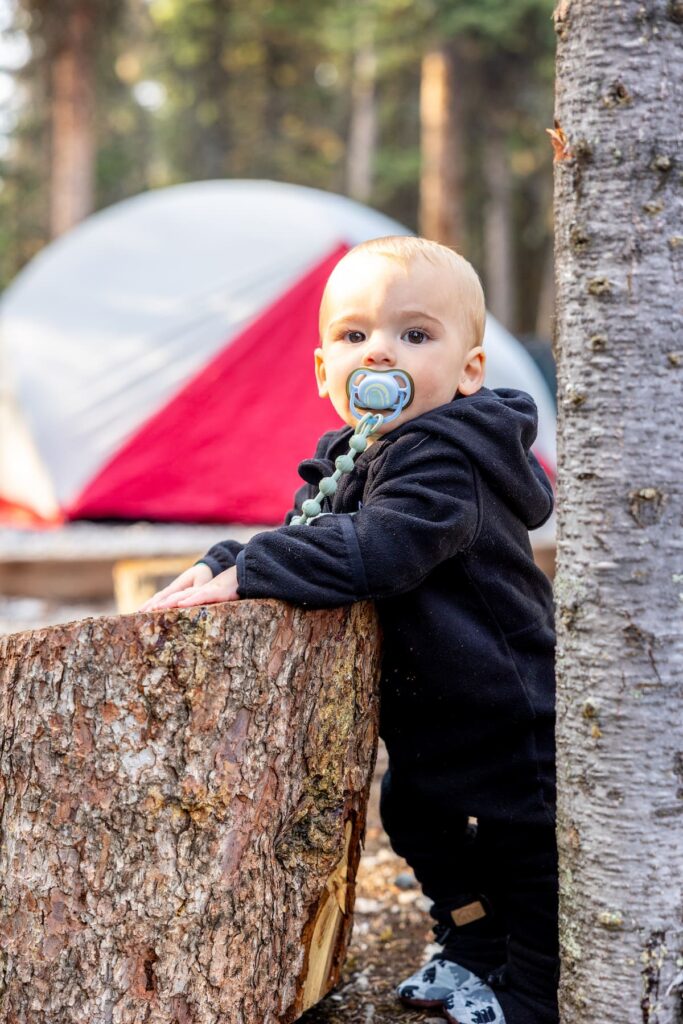
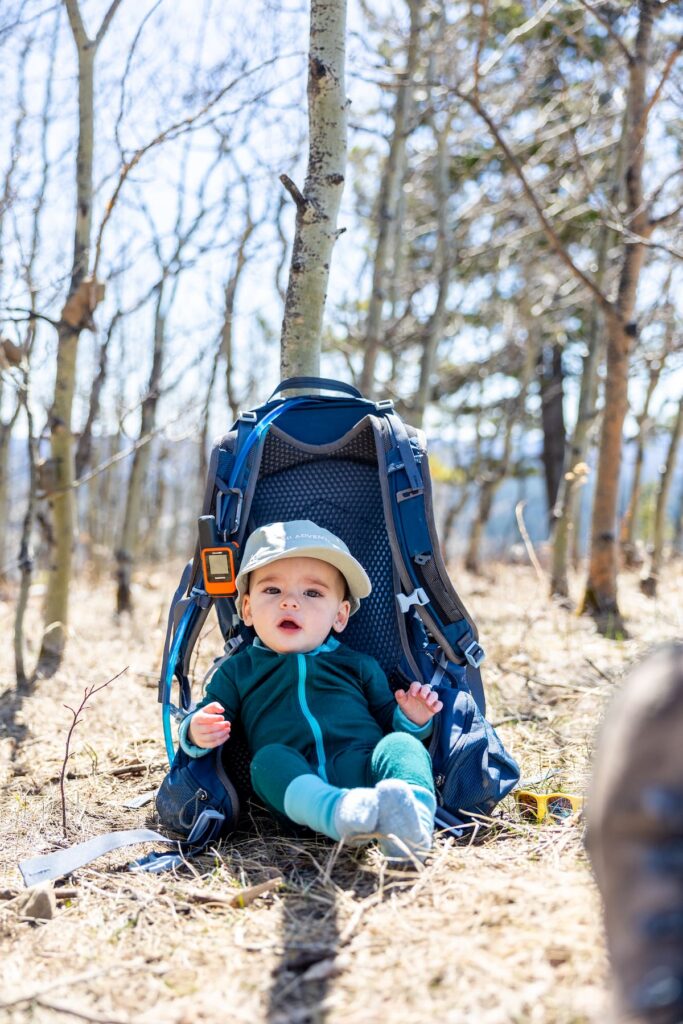
Not exactly, and that’s the good news. There’s no study that says 1,000 hours is the perfect amount. It’s a goal, not a rule. The research above shows real benefits from much smaller amounts, like two hours a week or 40 extra minutes a day.
So if 1,000 hours feels out of reach this year, don’t let that stop you. Every hour outside counts, and the habit matters more than the number.
While we’ve been working towards 1,000 hours outside in 2026, we unfortunately won’t hit it this year. Between Jared working full-time, keeping up with the household (cooking and cleaning!), and moving and living with my parents for the last six months, we had a lot less time to commit to the 1,000 hours. Not to mention, the cold Alberta winters played a factor too!
We’re still so proud of our effort. We’re on track to hit at least 600–650 hours this year, which we think is huge!
How We Fit Outdoor Time Into Real Life
Start small. A daily walk around the neighbourhood counts! Short outings add up faster than you’d think.
Make it part of the routine. Morning coffee outside, a walk after dinner, or naps in the carrier on the trail. When it’s part of the day, it doesn’t feel like another thing on the to-do list.
Dress for the weather. There’s a saying that there’s no bad weather, just bad clothing. Good layers make all the difference, especially for little ones. We share exactly how we dress Scout in The Ultimate Guide to Hiking With a Baby.
Bring the pups. Our dogs need to get out every day anyway, so they’re our built-in reminder to get outside too.
Track it. Colouring in a tracker or logging hours in an app is a fun way to see your progress, and it’s surprisingly motivating.
Lower the bar. It doesn’t have to be a big mountain day. Backyard time, the playground, or sitting on a blanket in the park all count.
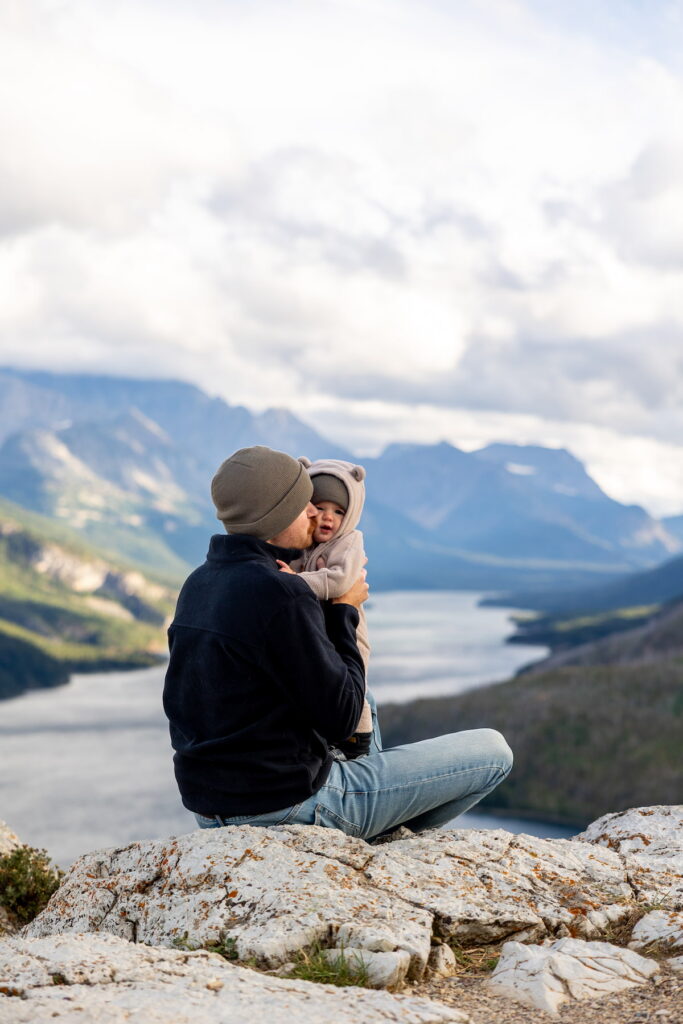
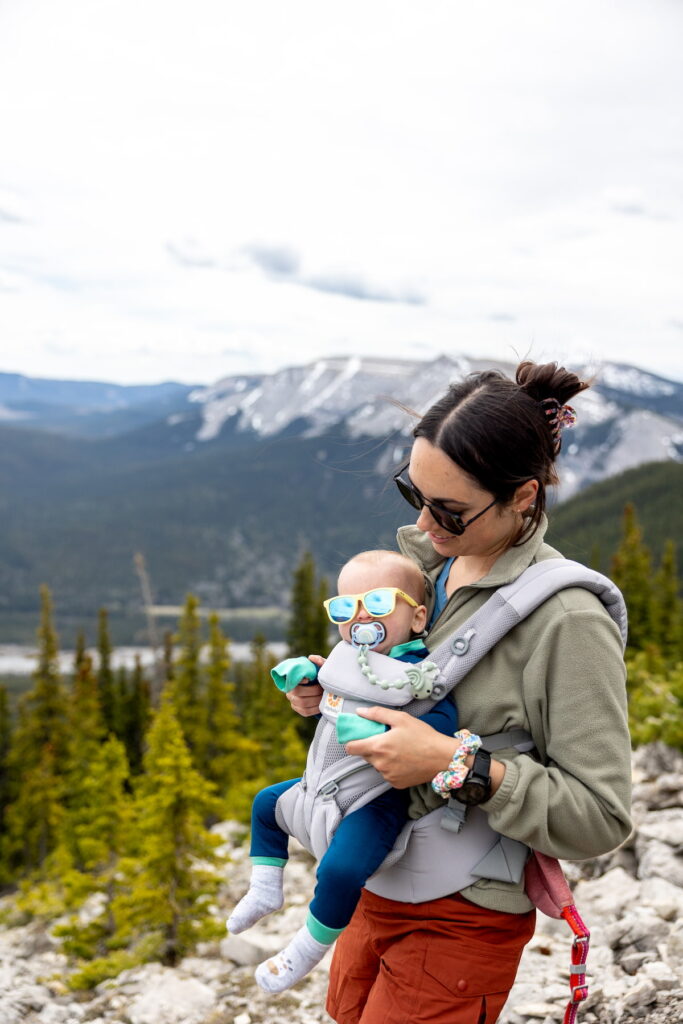
Are you doing 1000 Hours Outside this year, or have a favourite way to get your family outside? Send us a message on Instagram at @andrsn.pck. We’d love to hear how you make it happen!
Sources
- White MP, et al. (2019). Spending at least 120 minutes a week in nature is associated with good health and wellbeing. Scientific Reports, 9, 7730.
- Bratman GN, et al. (2015). Nature experience reduces rumination and subgenual prefrontal cortex activation. PNAS, 112(28), 8567–8572.
- He M, et al. (2015). Effect of time spent outdoors at school on the development of myopia among children in China: a randomized clinical trial. JAMA, 314(11), 1142–1148.
- Dadvand P, et al. (2015). Green spaces and cognitive development in primary schoolchildren. PNAS, 112(26), 7937–7942.
- Tremblay MS, et al. (2015). Position Statement on Active Outdoor Play. International Journal of Environmental Research and Public Health, 12(6), 6475–6505.
- Council of Chief Medical Officers of Health. Active outdoor play statement. Public Health Network Canada.
- 1000 Hours Outside: About
The Anderson Pack, in your inbox
New trip reports and guides, about once a month
Family-friendly trails, gear we actually use and free one-page guides from the Alberta Rockies.
No spam, ever. Unsubscribe anytime.